ULTRAFLOAT: Intelligent IoT Water Monitor
Personal Project•MAY 2026
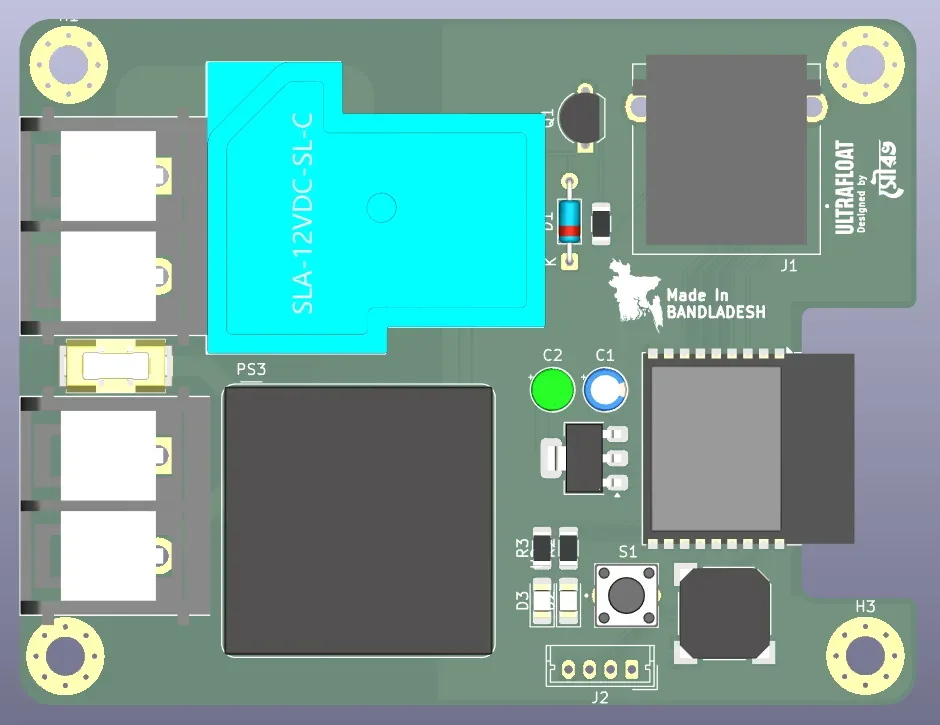
Overview & Abstract
This project presents ULTRAFLOAT, an intelligent, contactless, temperature-compensated water level monitoring and automated pump control system. It is designed to address the fundamental limitations of conventional mechanical float switches, such as binary-only state reporting, mechanical wear, mineral corrosion, and the lack of remote telemetry. ULTRAFLOAT provides continuous, high-precision distance readings and dynamic automation.
System Architecture
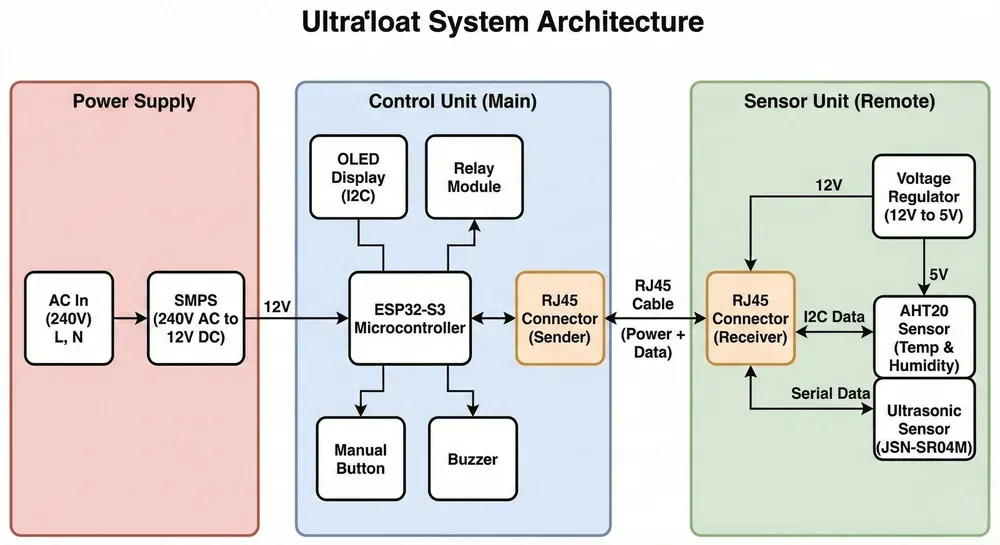
ULTRAFLOAT is built using a distributed two-unit hardware architecture, communicating via a single CAT5 cable. The system blocks are structured as follows:
Dynamic Temperature Compensation
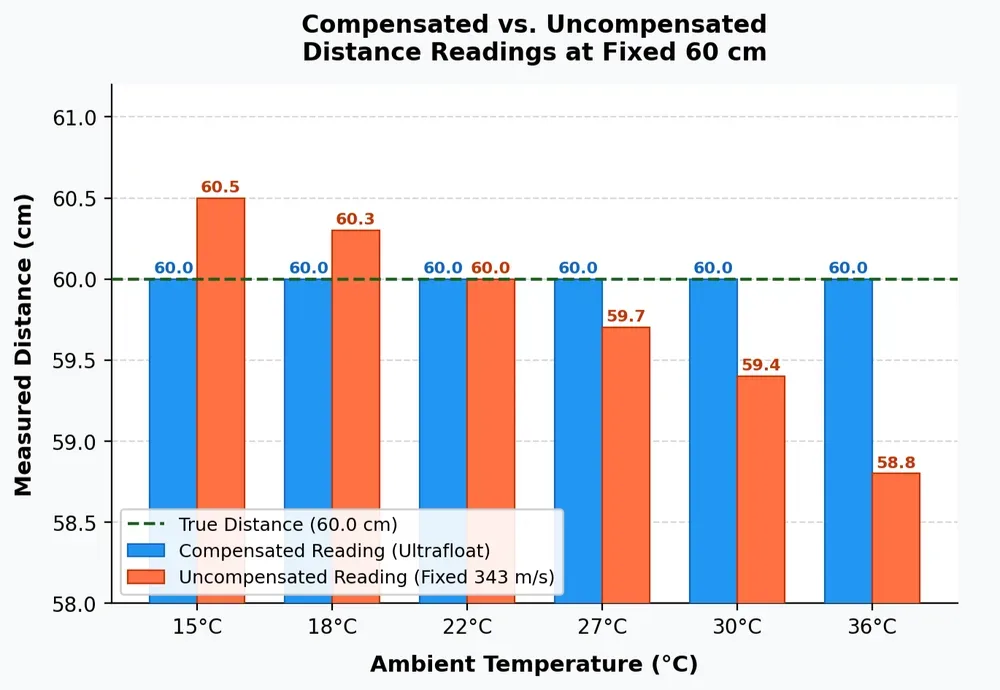
Temperature variation is a critical source of systematic error in ultrasonic sensing because the speed of sound in air varies significantly with ambient temperature (from ~340 m/s at 15°C to ~353 m/s at 36°C). This introduces systematic errors of up to 2% if left uncorrected. ULTRAFLOAT eliminates this drift through a real-time dynamic compensation algorithm governed by the relation:
V = 331.3 + 0.606 × T (m/s)
where T is the ambient temperature in degrees Celsius measured by a colocated AHT20 digital sensor at the tank site. This ensures precision down to 2.5 mm across all seasonal temperature changes.
V = 331.3 + 0.606 × T (m/s)
where T is the ambient temperature in degrees Celsius measured by a colocated AHT20 digital sensor at the tank site. This ensures precision down to 2.5 mm across all seasonal temperature changes.
Embedded Hardware & High-Efficiency Custom SMPS
The system utilizes a distributed hardware design divided into two units connected by a single CAT5/RJ45 Ethernet cable which runs both 12V DC power and digital data (I²C and UART):
• Main Control Unit (MCU): Houses the ESP32-S3 microcontroller, OLED status display, relay module, status LEDs, and buzzer interface.
• Remote Sensor Unit (RSU): Placed at the tank rim, housing the waterproof JSN-SR04M ultrasonic transducer, the AHT20 sensor, and local voltage regulation.
Powering the MCU is a custom-designed Switched-Mode Power Supply (SMPS) transforming 240V AC mains to a highly stable 12V DC output, achieving an outstanding 96% conversion efficiency.
• Main Control Unit (MCU): Houses the ESP32-S3 microcontroller, OLED status display, relay module, status LEDs, and buzzer interface.
• Remote Sensor Unit (RSU): Placed at the tank rim, housing the waterproof JSN-SR04M ultrasonic transducer, the AHT20 sensor, and local voltage regulation.
Powering the MCU is a custom-designed Switched-Mode Power Supply (SMPS) transforming 240V AC mains to a highly stable 12V DC output, achieving an outstanding 96% conversion efficiency.
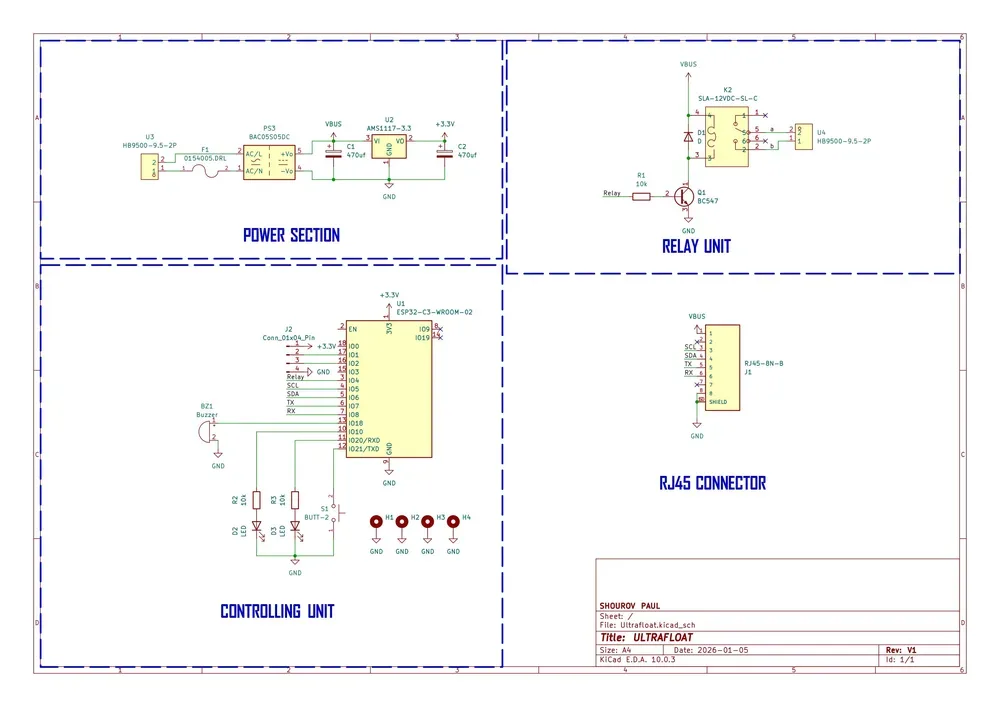
Hardware Schematic
Power Output & Oscilloscope Validation
Oscilloscope testing validated the custom SMPS under load. The output waveform shows a highly stable 12.1V DC output with a peak-to-peak ripple of only 80 mV, keeping voltage fluctuation well within safe operational limits. This clean power delivery prevents noise-induced spikes and jitter in the downstream sensor readings.
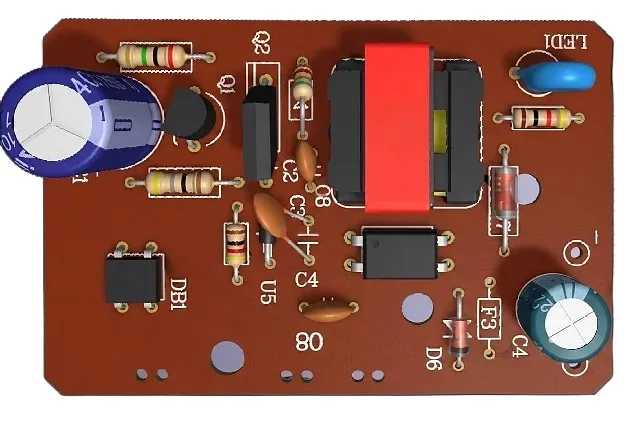 Custom SMPS PCB Layout
 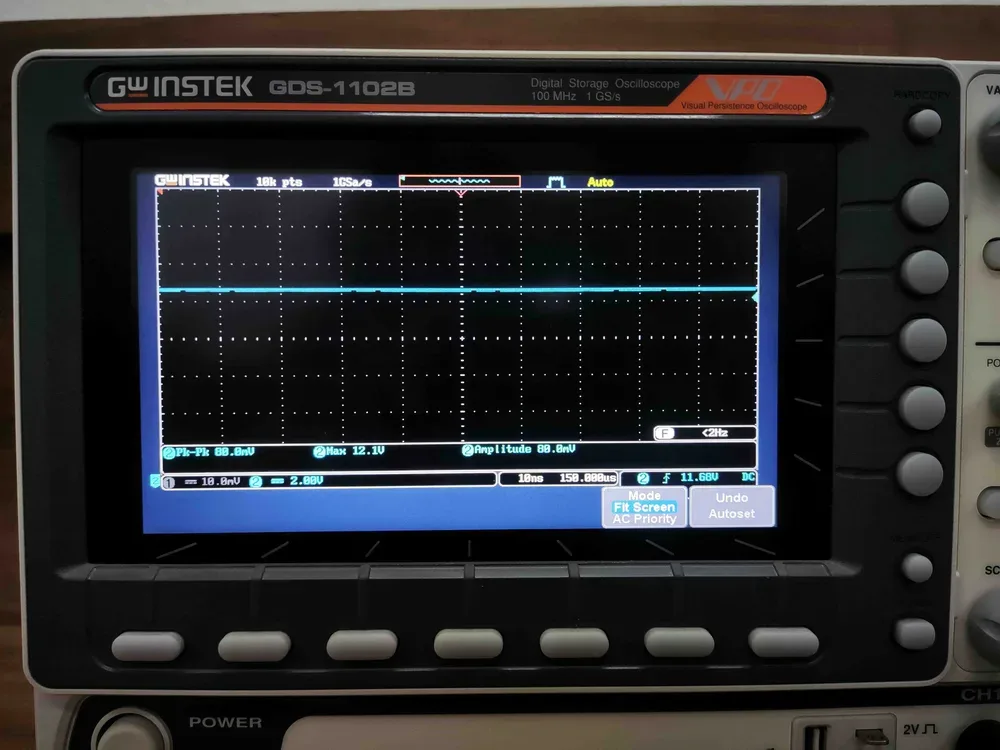 Oscilloscope Validation (80mV Pk-Pk)
Custom SMPS PCB Layout Oscilloscope Validation (80mV Pk-Pk) Physical Realisation & Installation Phases
The system prototype was constructed on a soldered Veroboard layout, containing all core MCU components. The RSU is housed in a rugged 3D-printed enclosure mounted directly to the rim of the water tank, keeping all sensitive circuitry safe and dry indoors.
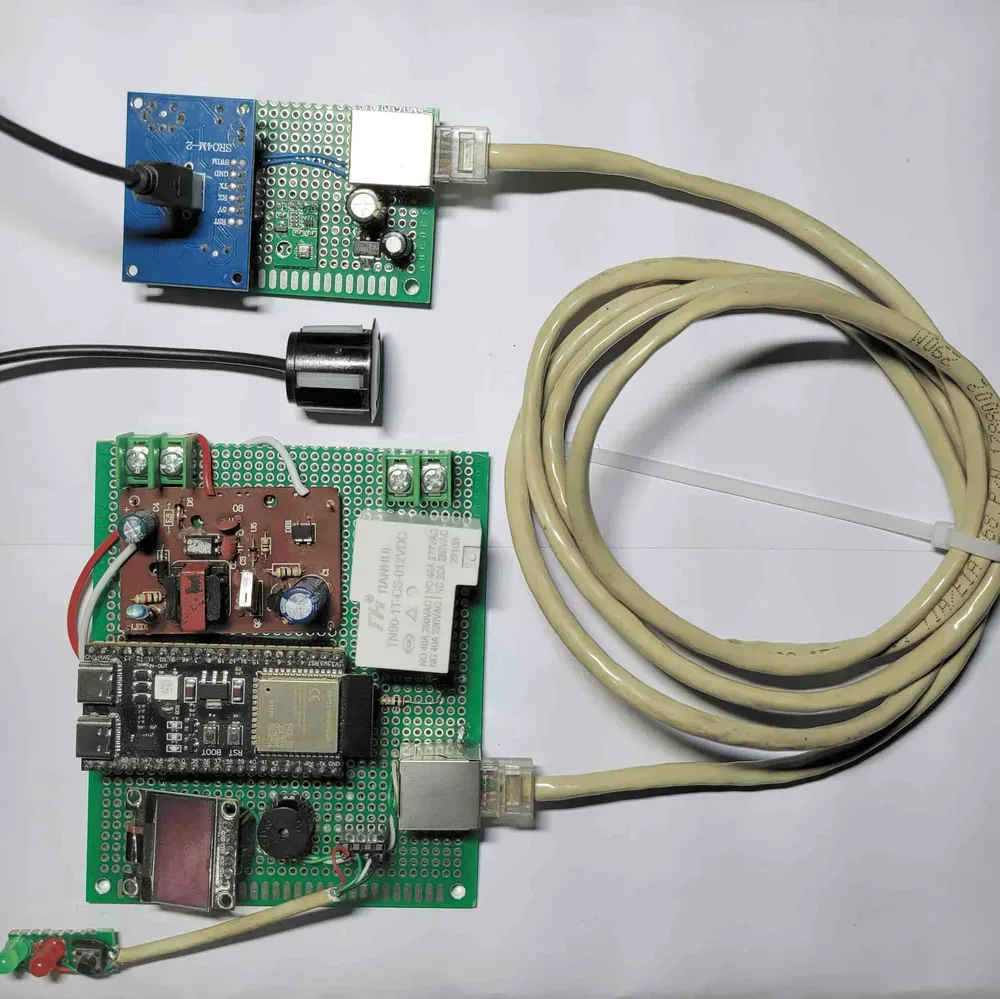 Veroboard Assembly
 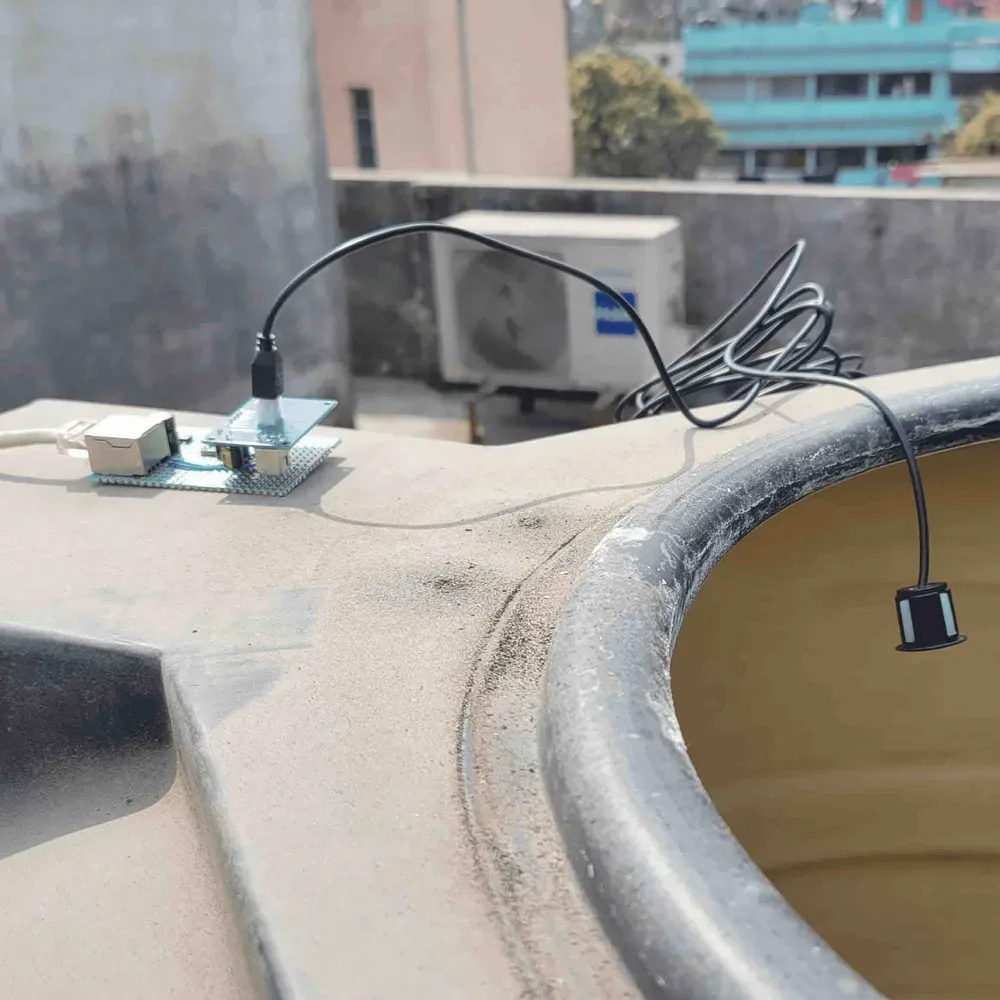 RSU at Water Tank
 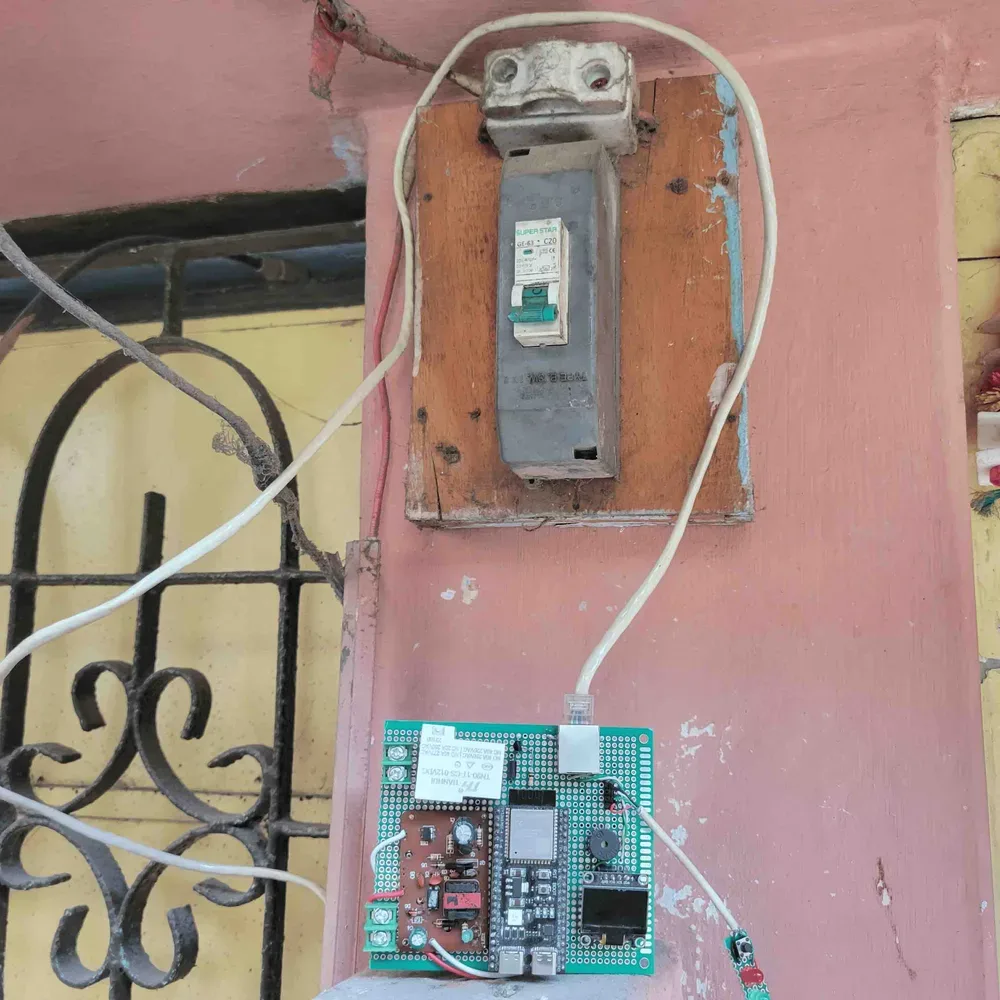 MCU at Ground Station
Veroboard Assembly RSU at Water Tank MCU at Ground Station WebSocket Web Dashboard Interface
ULTRAFLOAT features a single-page web application embedded directly in the ESP32-S3 flash memory as a
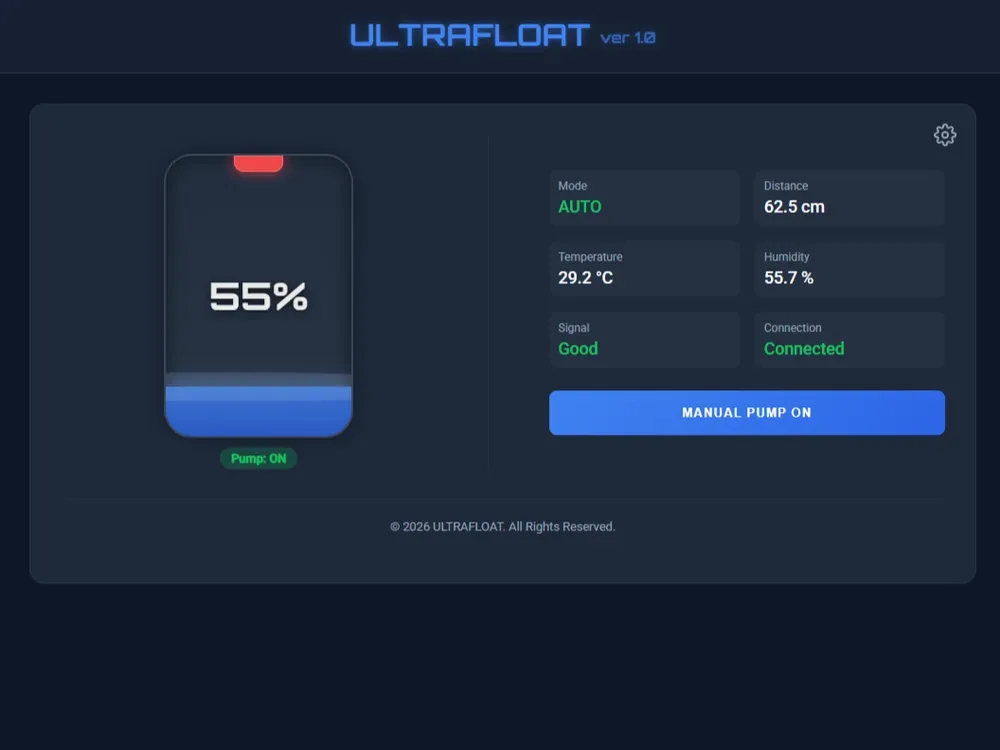 Desktop Dashboard View
 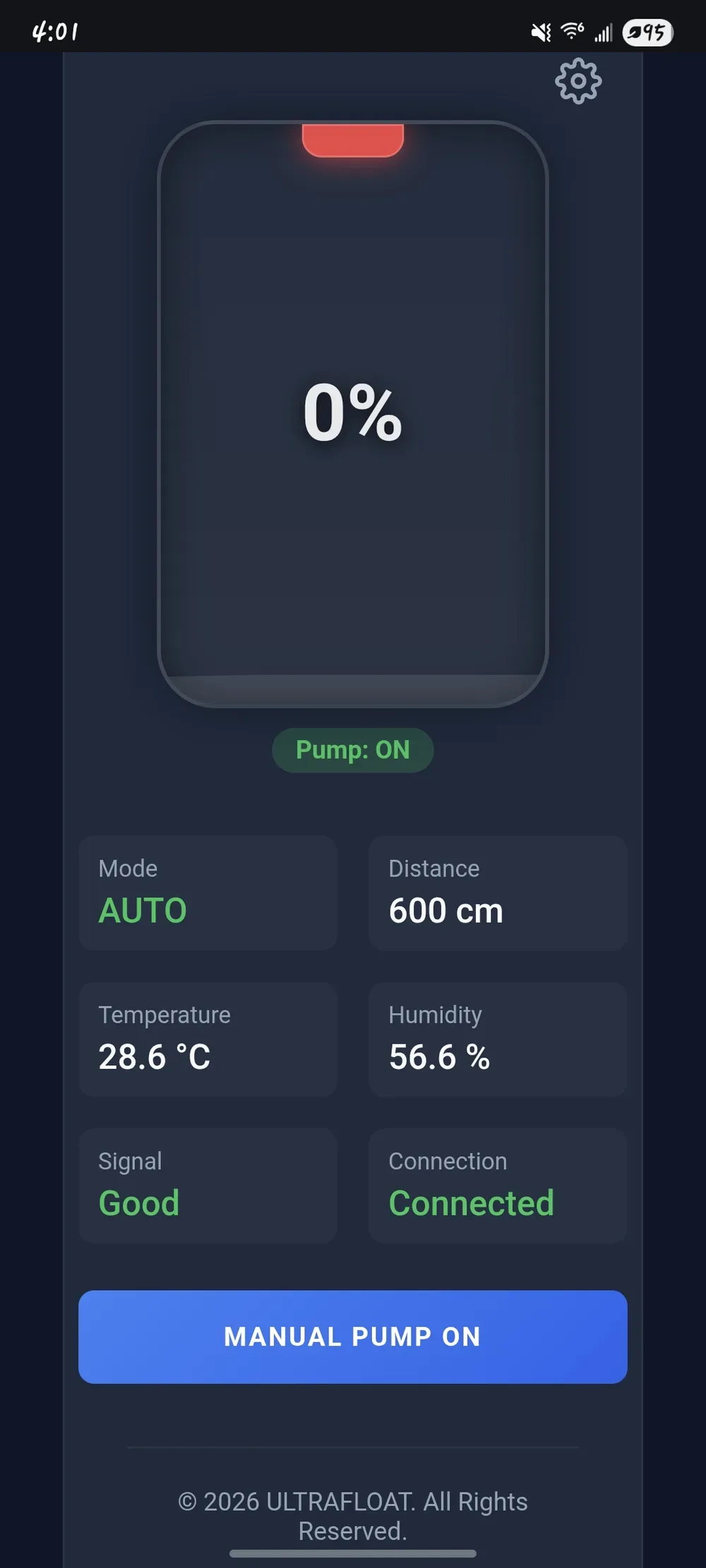 Responsive Mobile View
PROGMEM string. Telemetry is streamed from the MCU to browser instances via a persistent WebSocket connection, yielding a refresh latency under 1 second with zero external cloud dependencies. Users can configure fill limits, set custom calibration offsets, and trigger manual pump overrides. Desktop Dashboard View Responsive Mobile View Firmware Core: Compensated Range Calculation
Ultrafloat_IK.ino
1float calculateCompensatedDistance(float durationUs, float temperatureC) {
2  // V = 331.3 + 0.606 * T (m/s)
3  float speedOfSound = 331.3 + (0.606 * temperatureC);
4
5  // Convert microsecond pulse width to seconds (Time of Flight)
6  float timeSeconds = durationUs / 1000000.0;
7
8  // Distance = (V * t) / 2
9  float distanceMeters = (speedOfSound * timeSeconds) / 2.0;
10
11  // Return distance in centimeters
12  return distanceMeters * 100.0;
13}